Author Archives
The U.S. Wildland Fire Service in Alaska (USWFS) is located at Fort Wainwright, Alaska, provides wildland fire suppression services for over 244 million acres of Department of the Interior and Native Corporation Lands in Alaska. In addition, USWFS has other statewide responsibilities that include: interpretation of fire management policy; oversight of the BLM Alaska Aviation program; fuels management projects; and operating and maintaining advanced communication and computer systems such as the Alaska Lightning Detection System. AFS also maintains a National Incident Support Cache. The U.S. Wildland Fire Service in Alaska provides wildland fire suppression services for America’s “Last Frontier” on an interagency basis with the State of Alaska Department of Natural Resources Division of Forestry & Fire Protection, U.S. Forest Service, National Park Service, Bureau of Indian Affairs, U.S. Fish and Wildlife Service, and the U.S. Military in Alaska.
-
Forecast Winds Could Bring Smoke From Kopshesut Fire Into Ambler as Weather Warms Up
Light westerly winds are predicted today and, if fire activity increases as temperatures rise, could blow smoke into Ambler. Firefighters continue strengthening firelines in chilly conditions ahead of the expected warm‑up to keep the Kopshesut Fire from moving closer to… Read More ›
-
Cloudy Weather, Showers Help Firefighters Increase Containment of Kopshesut Fire
Cloudy weather with isolated showers on Sunday helped firefighters secure more of the fire’s edge. Containment increased to 30%, and the fire remains estimated at 1,447 acres. Although the area received more rain than expected, it likely wasn’t enough to… Read More ›
-
Firefighters, Aircraft Hold Afternoon Flareup on Kopshesut Fire
Firefighters were already working on the ground when a small section on the west side of the fire near the Kobuk River flared up Saturday afternoon, sending a large plume of smoke into the air. The two water scoopers were… Read More ›
-
Kopshesut Fire Slows as Firefighters and Aircraft Strengthen Firelines
Winds and fire activity decreased Friday as U.S. Wildland Fire Service personnel and aircraft made progress toward containing the Kopshesut Fire (#137), burning about a mile west of Ambler. Water dropping aircraft and smokejumpers made solid progress on the eastern… Read More ›
-
U.S. Wildland Fire Service Firefighters, Aircraft Continue Efforts to Contain the Kopshesut Fire near Ambler
Fire activity significantly moderated overnight, allowing U.S. Wildland Fire Service personnel to advance efforts to stop the spread of the Kopshesut Fire toward Ambler. Using a direct extinguishment strategy, 24 smokejumpers — supported by single‑engine water scoopers, helicopters, and two… Read More ›
-
US Wildland Fire Service launches attack on fire near Ambler
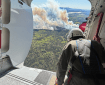
Firefighting resources mobilized Thursday afternoon after a wildfire ignited in the Ambler village landfill. Twelve smokejumpers responded immediately, with another 12 en route, supported by single‑engine water scoopers, a helicopter, and two Alaska Division of Forestry & Fire Protection air‑retardant tankers.
-
Smokejumpers respond to new fire in training area northeast of Eielson AFB
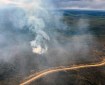
Twelve Alaska smokejumpers are working on one of two small fires reported in the Yukon Training Area Monday afternoon.
-
Smokejumpers Contain and Control Little Fire Near Stebbins
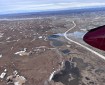
Eight Alaska Smokejumpers responded to a new wildfire about 5 miles south of Stebbins on Saturday. The Little Fire (#063) was reported around 3 p.m. on the east side of the Little Saint Michael Canal. Two Native allotments are nearby — one a mile south across the canal and another 2 miles to the southeast.
-
USWFS Monitoring Two Small Fires in Yukon Training Area
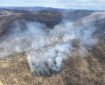
The Lynx 1 (#055) and Lynx 2 (#056) fires are burning roughly 9 miles southeast of Two Rivers and Pleasant Valley, south of mile 28 Chena Hot Springs Road, in an area last burned during the 2013 Stuart Creek Fire.
-
From deep snow and bitter cold to dry grass: Alaska’s shift into wildfire season needs your help

Winter’s grip might have felt endless this year, but the wildfire season is at our doorstep. This week (May 3-9) is Alaska Wildland Fire Prevention and Preparedness Week, a timely reminder to explore the resources available to help communities prepare for and better understand wildland fire.
 Alaska Wildland Fire Information