Author Archives
The Bureau of Land Management Alaska Fire Service (AFS) located at Fort Wainwright, Alaska, provides wildland fire suppression services for over 244 million acres of Department of the Interior and Native Corporation Lands in Alaska. In addition, AFS has other statewide responsibilities that include: interpretation of fire management policy; oversight of the BLM Alaska Aviation program; fuels management projects; and operating and maintaining advanced communication and computer systems such as the Alaska Lightning Detection System. AFS also maintains a National Incident Support Cache with a $10 million inventory. The Alaska Fire Service provides wildland fire suppression services for America’s “Last Frontier” on an interagency basis with the State of Alaska Department of Natural Resources, USDA Forest Service, National Park Service, Bureau of Indian Affairs, U.S. Fish and Wildlife Service, and the U.S. Military in Alaska.
-
Comments sought on preliminary assessment of program to reduce the risk of wildfires in East-Central Alaska
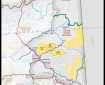
The Bureau of Land Management is seeking public comments through May 15 on its programmatic environmental assessment for reducing the risk of wildfires on public lands it manages in east-central Alaska.
-
Burning planned on Donnelly Training Area to reduce wildfire threat near Delta Junction
Starting as early as Saturday, BLM AFS and USARAK will implemented prescribed fire in the DTA to reduce the wildfire threat near Delta Junction. Rx burns are fires that are intentionally set under controlled conditions to remove dry and dead grass and to lower the risk that wildfires could impact nearby communities.
-
Burning operations planned for military training lands in Interior Alaska to reduce wildfire threat
The snow is quickly melting in Interior Alaska. The Bureau of Land Management Alaska Fire Service and U.S. Army Alaska will soon implement multiple prescribed fires on military training lands in Interior Alaska. As conditions allow, prescribed burning in the Donnelly Training Area, Yukon Training Area, and Fort Wainwright may continue throughout the spring. #RxFire
-
BLM AFS awards three contracts for Alaska village-based Type 2 wildland firefighting crews
The Bureau of Land Management Alaska Fire Service (BLM AFS) awarded three contracts for Type 2 wildland firefighting hand crews based in rural northeastern and Interior Alaska villages for the 2020 fire season. The contractors selected will base crews in… Read More ›
-
Federal Alaska Emergency Firefighter requirements adjusted for 2020 season
Because the BLM Alaska Fire Service remains focused on the safety and well-being of our employees and the public, preparedness regarding medical, physical and training requirements for Alaska federal (BLM) Emergency Firefighters (EFF) were adjusted for the 2020 fire year… Read More ›
-
BLM AFS, USARAK burn woody debris piles from fuel break on military lands near Delta Junction
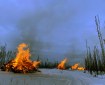
Update on Feb. 21, 2020: BLM Alaska Fire Service personnel completed burning woody debris piles in the Donnelly Training Area West (DTAW) between Feb. 9-12. They were able to burn the remaining 54 large, machine-built piles on the far west… Read More ›
-
BLM AFS seeks contracts for Alaska village-based Type 2 wildland firefighting crews
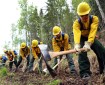
The Bureau of Land Management Alaska Fire Service (BLM AFS) is soliciting contracts for Type 2 wildland firefighting hand crews based in rural Alaska villages for the 2020 fire season. Multiple contractors may be selected to base crews in communities… Read More ›
-
BLM AFS 2019 Emergency Firefighter review
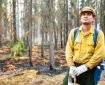
The BLM Alaska Fire Service uses Type 2 Emergency Firefighters (EFF)/Administratively Determined (AD) fire crews and single resource personnel to supplement its regular workforce in the event of wildfire emergencies. The program, which is separate from the State of Alaska’s… Read More ›
-
From the Last Frontier to the Land Down Under
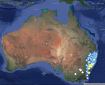
Alaskan tapped as liaison during firefighting efforts in Australia After two days of travel from the northern hemisphere to the land down under, BLM Alaska Fire Service Associate Manager Kyle Cowan arrived in Sydney where he’ll be the be a… Read More ›
-
Fire season may end, but work continues for BLM AFS Cache
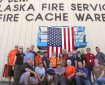
Warehouse preparing equipment for use on future fires This summer, more than 606 miles of hose was used on fires throughout Alaska. That’s more than the distance between Fairbanks and Homer (580 miles). All that hose needs to be cleaned,… Read More ›
 Alaska Wildland Fire Information