Author Archives
The U.S. Wildland Fire Service in Alaska (USWFS) is located at Fort Wainwright, Alaska, provides wildland fire suppression services for over 244 million acres of Department of the Interior and Native Corporation Lands in Alaska. In addition, USWFS has other statewide responsibilities that include: interpretation of fire management policy; oversight of the BLM Alaska Aviation program; fuels management projects; and operating and maintaining advanced communication and computer systems such as the Alaska Lightning Detection System. AFS also maintains a National Incident Support Cache. The U.S. Wildland Fire Service in Alaska provides wildland fire suppression services for America’s “Last Frontier” on an interagency basis with the State of Alaska Department of Natural Resources Division of Forestry & Fire Protection, U.S. Forest Service, National Park Service, Bureau of Indian Affairs, U.S. Fish and Wildlife Service, and the U.S. Military in Alaska.
-
Rain offers temporary relief on Ninetyeight Fire, crews advance containment efforts

Wetting rains brought a welcome pause in fire activity on the Ninetyeight Fire (#218), allowing firefighters to make strategic progress on containment lines and structure protection. While smoldering continued in some areas, overall fire behavior remained minimal under cooler, wetter conditions.
-
Widespread rain across the Upper Yukon slows fire growth
Precipitation has fallen across the Upper Yukon for the last two days. Some areas have received up to an inch of rain during that timeframe, although the accumulation has varied across the zone. Precipitation will begin to slow on Thursday, with a return to dry and warm conditions beginning on Friday
-
Northwest Alaska continues to see new fires
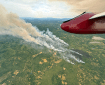
Today, windy conditions out of the north will continue to increase wildfire acreage in the Galena Zone – an area the size of Montana covering Western Alaska north of the Yukon River. There are 60 active wildfires in the zone… Read More ›
-
Firefighters hold key areas as Roundabout Complex grows under challenging weather conditions

Strong winds and dry air fueled another active day on the Roundabout Complex, now mapped at 44,153 acres. All recent growth—approximately 4,800 acres since yesterday—has occurred on the Moldy Fire (#279). The other fires in the complex continue to remain unchanged.
-
Evacuation level reduced to “Ready” for the Elephant Fire
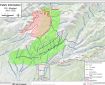
Cooler, wetter weather settled over the Elephant Fire (#225) yesterday, bringing much-needed precipitation across the area. The Cherokee Hotshots scouted the southern edge of the fire and finalized a strategy to secure that portion of the perimeter. Work will begin in that area today, if weather allows. Meanwhile, the North Star Type 2 hand crew continued work on securing the eastern edge of the fire where it jumped across Minook Creek.
-
Cooler temperatures and rain assist firefighters on Ptarmigan Complex
Scattered rain fell over the Ptarmigan Complex throughout July 8. Fire resources within Central reported heavy rain while those closer to the Turtle Fire (#243) experienced more inconsistent precipitation earlier in the day. Given the shift in weather to cooler and wetter conditions, more direct tactics are being employed to protect values at risk.
-
Firefighters capitalize on cooler weather to advance containment efforts on Ninetyeight Fire
Recent cooler temperatures and periods of scattered rainfall have brought welcome relief to crews battling the Ninetyeight Fire (#218). The weather shift has enabled progress on fire containment and structure protection across key areas. Yesterday, the fire’s activity remained low, largely limited to smoldering and creeping behavior. Periods of moderate rain in the south and southwest zone helped dampen fire behavior allowing firefighters to bolster and secure containment lines. In the northern section of the fire, low cloud cover hampered visibility, limiting efforts. Meanwhile, crews in the east successfully completed structure protection work on Alaska Native allotments, with plans to begin new structure protective efforts today.
-
Upper Yukon receives both rain and lightning, crews begin point protection on the Tsukon Fire
A change in weather has arrived in the Upper Yukon, with up to 4,600 lightning strikes impacting the zone since Monday. Precipitation accumulations are variable throughout the zone, with some areas receiving as little as one tenth inch of rain and the average amount for the zone being one quarter of an inch received by 5:00 p.m. Despite the presence of moisture, the possibility of new fires becoming established from lightning strikes remains high due to dry fuels.
-
Gusty northerly winds, warmer weather causing continual growth on Western Alaska fires
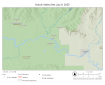
Today, cooler weather and windy conditions out of the north will continue to push flames and fire growth in the Galena Zone, which encompasses Western Alaska from the Yukon River north to the North Slope. The Galena Zone also recorded 1,202 lightning strikes on Monday.
-
Dry conditions drive Moldy Fire growth as crews protect threatened structures on Roundabout Complex
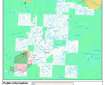
Persistent dry conditions and active fire behavior in western Alaska continue to shape operations on the Roundabout Complex, now mapped at 39,382 acres. All recent growth—approximately 4,000 acres since yesterday—occurred on the Moldy Fire (#279), with no changes on the other fires in the complex.
 Alaska Wildland Fire Information