As BLM AFS prepares for the inevitable approach of fire season, these elite firefighters are gearing up with their parachute training jumps.

As BLM AFS prepares for the inevitable approach of fire season, these elite firefighters are gearing up with their parachute training jumps.

Recruitment for the 2026 BLM Alaska Fire Service Type 2 North Star Fire Crew is open until April 1. This entry-level crew provides a pathway to a career in wildland firefighting.
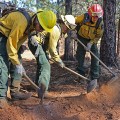
Deadline is Nov. 10 for potential contractors to submit proposals to provide wildland fire crews and fire suppression modules based in northern Alaska.
The BLM Alaska Fire Service is looking for hard working, physically fit, intelligent and experienced wildland firefighters interested in becoming Alaska Smokejumpers. Job announcements open Sept. 29-Oct. 27, 2025 on USAJobs.gov for the 2026 fire season.

As the fire season comes to a close in Alaska, the BLM Alaska Fire Service has shut down its remote station in Galena. After a busy season supporting 71 wildfires in the Galena Zone – BLM AFS’s farthest west protection zone – almost all personnel have either returned to AFS headquarters in Fairbanks, are working on fires in the Lower 48, or have finished for the season.
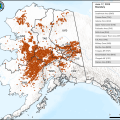
More than 170 wildfires ignited across Interior Alaska between June 15 and 29 during the 2025 Alaska fire season, most sparked by lightning. Fueled by hot, dry weather and almost 83,000 lightning strikes near the summer solstice, several fires quickly threatened homes, disrupted highways, and triggered evacuations across vast distances.
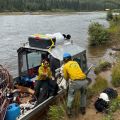
The number of staffed fires in the BLM Alaska Fire Service protection area continues to decline. Most fires are now in monitor status. Some are being allowed to fulfill their natural ecological role, while firefighters focus on protecting nearby sites of value, transporting unneeded equipment back to the BLM AFS Cache in Fairbanks, or completing administrative tasks.
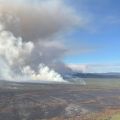
While fire season is winding down in much of Alaska, eastern regions remain hot and dry, keeping fire danger elevated. A load of BLM Alaska Fire Service smokejumpers is mobilizing Monday evening to protect an Alaska Native allotment from the Christian Fire (#255), about 50 miles north of Fort Yukon.
A detection flight yesterday flew several fires in the Alaska Fire Service (AFS) Upper Yukon Zone, which covers northeastern Alaska, to monitor fire behavior and activity. Daily helicopter reconnaissance flights on the Ptarmigan Complex fires are also helping firefighters determine future work and resource needs based on fire behavior.
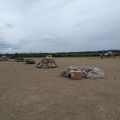
A slight uptick in containment on the Ptarmigan Complex and two additionally fires declared out in the Upper Yukon Zone reflect the dedicated work of firefighters to actively monitor area fires and strategically respond.
 Alaska Wildland Fire Information