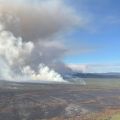
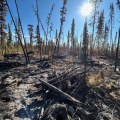
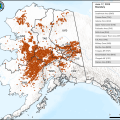
More than 170 wildfires ignited across Interior Alaska between June 15 and 29 during the 2025 Alaska fire season, most sparked by lightning. Fueled by hot, dry weather and almost 83,000 lightning strikes near the summer solstice, several fires quickly threatened homes, disrupted highways, and triggered evacuations across vast distances.
Ptarmigan Complex
BLM AFS responds to increased fire activity
In response to a recent uptick in fire activity during a warm and dry weekend, BLM Alaska Fire Service smokejumpers mobilized to three active fires over the past two days, including two new lightning-caused starts. They are focused on protecting Alaska Native allotments and remote cabins at risk from increased fire behavior.
Few staffed fires remain as firefighters demobilize across BLM AFS protection area
The number of staffed fires in the BLM Alaska Fire Service protection area continues to decline. Most fires are now in monitor status. Some are being allowed to fulfill their natural ecological role, while firefighters focus on protecting nearby sites of value, transporting unneeded equipment back to the BLM AFS Cache in Fairbanks, or completing administrative tasks.
Conditions remain hot, dry in Yukon Flats while rain reduces activity across much of Alaska
Operations are winding down across much of Alaska as rain has reduced fire activity and the need for firefighting resources — except in eastern Alaska, where conditions remain hot and dry.
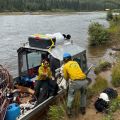
Twelve BLM Alaska Fire Service smokejumpers were mobilized Monday night to protect an Alaska Native allotment along the Sheenjek River from the Christian Fire (#255), burning about 50 miles north of Fort Yukon. The fire has burned approximately 52,400 acres within the Yukon Flats National Wildlife Refuge and remains active.
BLM AFS fire updates: Dry conditions linger in northeastern Alaska
While fire season is winding down in much of Alaska, eastern regions remain hot and dry, keeping fire danger elevated. A load of BLM Alaska Fire Service smokejumpers is mobilizing Monday evening to protect an Alaska Native allotment from the Christian Fire (#255), about 50 miles north of Fort Yukon.
Aviation resources prove critical to monitoring and operational planning on fires in northeastern Alaska
A detection flight yesterday flew several fires in the Alaska Fire Service (AFS) Upper Yukon Zone, which covers northeastern Alaska, to monitor fire behavior and activity. Daily helicopter reconnaissance flights on the Ptarmigan Complex fires are also helping firefighters determine future work and resource needs based on fire behavior.
Two fires declared out on Yukon-Charley Rivers National Preserve; Ptarmigan Complex efforts remain focused on monitoring, restoration
A slight uptick in containment on the Ptarmigan Complex and two additionally fires declared out in the Upper Yukon Zone reflect the dedicated work of firefighters to actively monitor area fires and strategically respond.
BLM AFS fires update: Crews continue work as fire managers prepare for chance of warmer weather, possible increased activity
In BLM AFS’s protection area, 166 active fires remain amidst warmer, drier weather conditions, prompting increased vigilance from fire managers. So far, 404 fires have burned nearly 1 million acres. Crews are completing suppression tasks on major fires like Ptarmigan and Lush, while remaining prepared for potential new fire activity.
Tlozhavun Fire declared out; crews continue fire and aviation operations on the Ptarmigan Complex
Fire managers called the Tlozhavun Fire out yesterday after the fire was 100% contained and completely suppressed. A 38-person Type 4 management organization continues to strategically engage on the Ptarmigan Complex fires. Warmer and drier weather will move into the BLM Alaska Fire Service (BLM AFS) Upper Yukon Zone, which covers northeastern Alaska, over the weekend.
Crews depart Tlozhavun Fire after hard work yields 100% containment and complete extinguishment
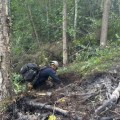
Firefighters on the Tlozhavun Fire have completely controlled and suppressed the 22-acre fire 10 miles south of Fort Yukon and will transition off the incident to support other firefighting efforts. Steady progress on Ptarmigan Complex fires continued Tuesday, including the removal of structure protection equipment because fire is no longer posing a threat to the cabin. Fire managers will continue to watch for and be ready to respond to new starts in northeastern Alaska as warmer, drier weather is expected in the coming days, particularly in the Yukon Flats.