There’s a whole lot of partnering going on in Alaska. The Alaska Region is known for its authentic relationships with local, state, tribal and other federal agencies and communities of all sizes. That same dedication to collaboration is evident in the realm of fire protection.
This September, Forest Service employees and staff from the State of Alaska, Division of Forestry & Fire Protection toured Alaska to see how federal funding is making impactful, local changes in fire prevention and community resilience.
These efforts demonstrate a successful collaboration between the agency and partners such as local fire departments, boroughs, and the state, showcasing how partnerships can protect communities from wildfire hazards.
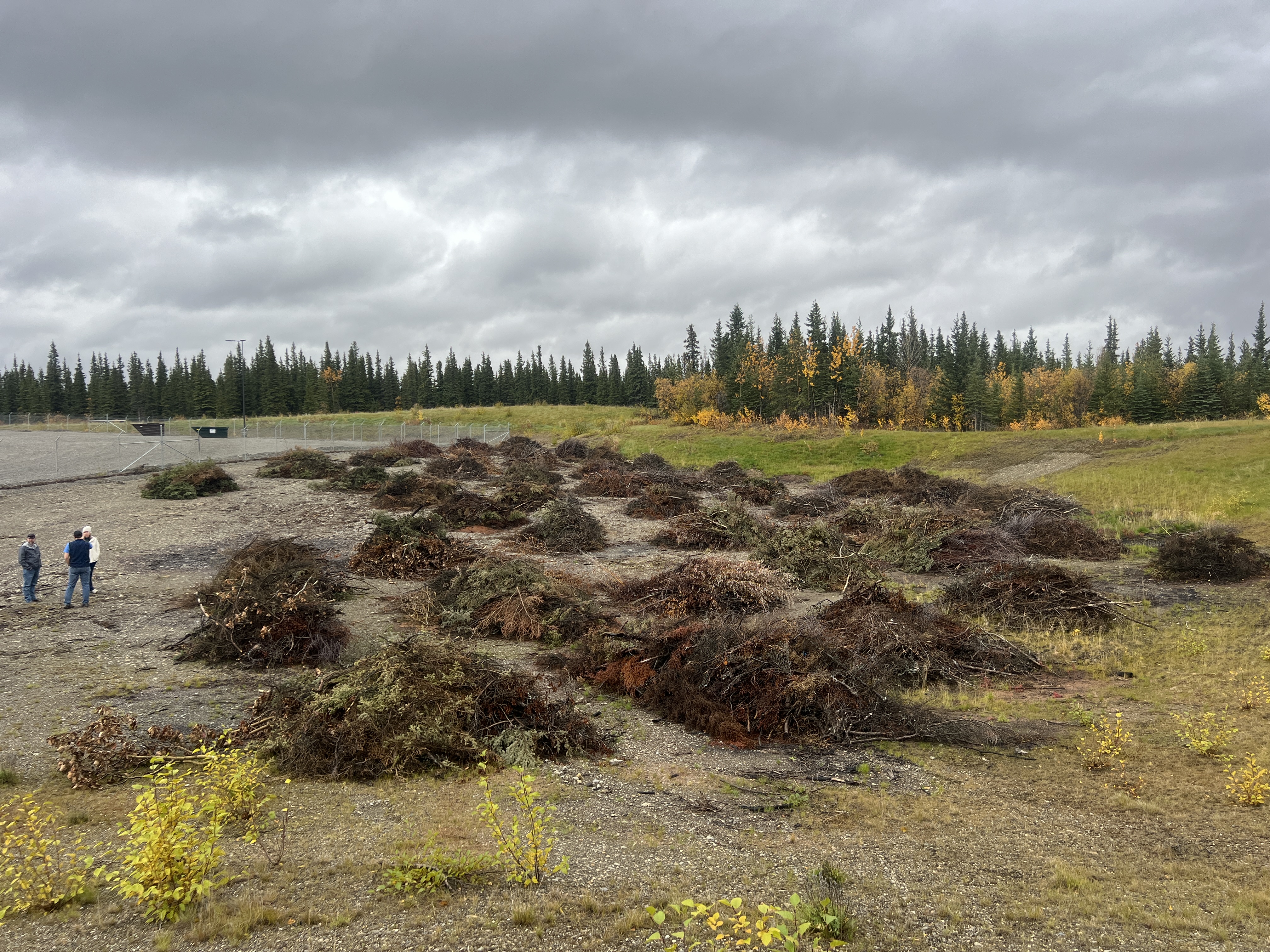
The focus was on woody debris disposal sites, a program designed to reduce wildland fire risks, and additionally showcased how multiple pass-through funding programs from the Forest Service to the State of Alaska converge to enhance fire prevention strategies across the state.
Safe Disposal Mitigates Fire Hazards
The tour included visits to six woody debris disposal sites in the Mat-Su and Denali Boroughs, along with a developing site in Nenana. Funded through Forest Service programs administered by the State of Alaska, these sites provide residents with a safe alternative to burning woody debris, a leading cause of wildfires in the region. Instead of risking uncontrolled burns, the debris is professionally processed, either burned safely or chipped into compost for agricultural use or innovative wood programs.

Expanding Woody Debris Disposal Initiatives
The six disposal sites operated by the Mat-Su and Denali Boroughs play a crucial role in reducing wildfire risks by providing residents with safe and accessible options for disposing of woody debris. To further enhance these efforts, a new initiative seeks to repurpose the collected debris by converting it into compost that can be made publicly available.
However, transporting debris to disposal sites remains a challenge for many residents. Programs like ‘Chipper Days,’ organized by the West Lakes Volunteer Fire Department, help alleviate this issue by bringing mobile chipping services directly to neighborhoods and hosting events that make disposal more convenient and effective.

Strengthening Communities with Wildfire Protection Plans
Community Wildfire Protection Plans are collaboratively created to reduce the threat of wildfire by locally identifying risks, prioritizing treatment areas and creating targeted strategies. The Denali Borough and Nenana Native Association are currently developing these plans using what is referred to as pass-through funding and Community Wildfire Defense Grants. In Denali Borough’s McKinley Village, local planning efforts led to the creation of a nearby disposal site, providing a vital resource for residents who previously had to travel long distances to dispose of debris safely.
Additional federal funding, such as the Volunteer Fire Assistance grant program, has also bolstered local Alaska fire departments protection and prevention initiatives. The McKinley Volunteer Fire Department, visited in the Denali Borough, used these funds to acquire essential firefighting equipment. The financial support enabled staff to safely manage pile burning at the local disposal site and simultaneously enhance their wildland fire response capability.

Nenana: A Model for Sustainable Fire Prevention
Nenana’s Forest Service Wood Innovations Program grant project offers an inspiring case study in community-led fire prevention and sustainable energy. This project will reduce fire hazards by utilizing woody debris as fuel for a biomass boiler which will heat vital community buildings including the local school, fire department, water treatment facility, and recreation hall.
Collaboration For A Fire-Adapted Future
The partnership displayed through these federal and state programs highlight the power of collaboration, innovation, and the lasting impact of federal funding in building fire-adapted communities across Alaska. Together, these efforts are creating a safer, more resilient future for residents in wildfire-prone areas.

Categories: AK Fire Info, Alaska DNR - Division of Forestry (DOF), Grants, USDA Forest Service, Region 10
 Alaska Wildland Fire Information