During Alaska’s hunting season, the Division of Forestry & Fire Protection wants to remind hunters and other outdoor enthusiasts to help prevent human-caused fires. You should also be aware of the risks of recreating near recently burned areas.
While recent rainfall has increased moisture and reduced wildfire activity in some regions, others remain in high fire danger due to warm, dry, and windy conditions; a single spark can still start a wildfire. So, hunters are encouraged to be careful outdoors.
Campfire Safety
If you plan to have a campfire, follow these tips to minimize fire risk:
- Choose an open location: Build your campfire on mineral soil or gravel, away from trees, dry grass, and brush. Make sure there’s no vegetation overhead.
- Create a fire ring: Surround your fire with rocks or dig a shallow pit to contain the flames and prevent them from spreading.
- Never leave a fire unattended: Someone should always be watching your campfire, even for a short time.
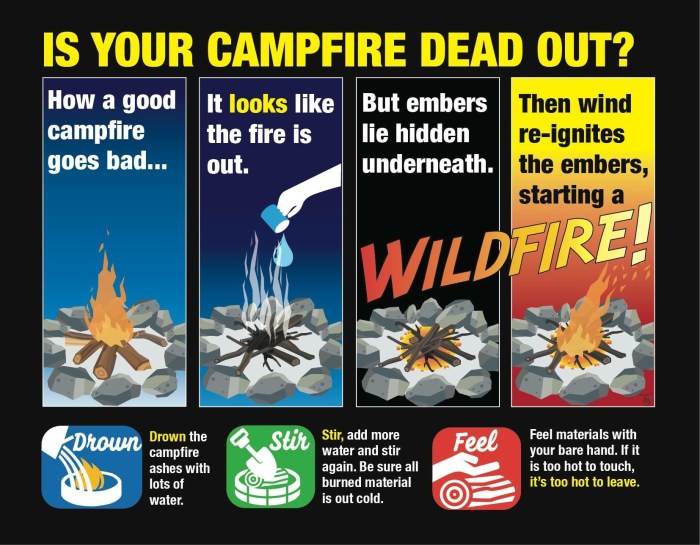
- Extinguish thoroughly: Before leaving or going to sleep, pour water on the flames, stir the ashes, and ensure the fire is cold to the touch. A smoldering fire can easily reignite.
Equipment Safety
Your hunting equipment can also start fires. Here’s how to prevent that:
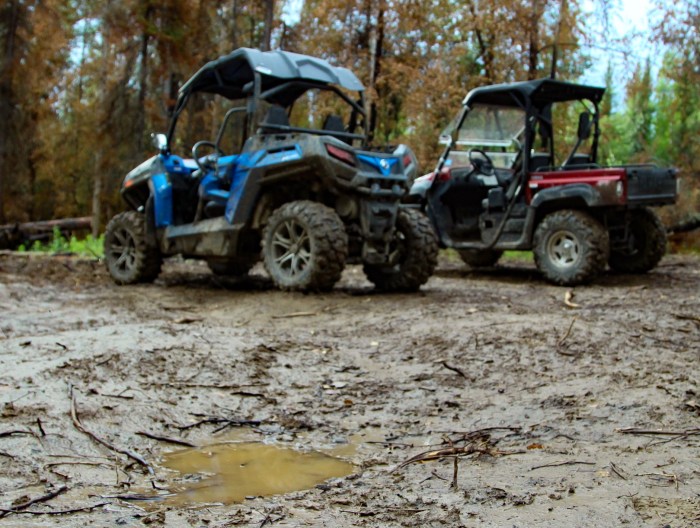
- Spark arresters: Make sure your ATV, chainsaw, and other motorized equipment have properly installed and functioning spark arresters. These devices prevent sparks from escaping and igniting dry vegetation.
- Inspect your equipment: Regularly check your equipment’s exhaust, muffler, and engine for any buildup of dry grass or other debris that could catch fire.
- Trailer safety: If you’re using a trailer, tighten the cross chains to prevent them from dragging and creating sparks on the road.
Risks of Hunting in Burned Areas
Recent wildfire-burned areas pose serious hidden dangers. Be prepared and stay informed about recent wildfire activity in your hunting area. When recreating in these areas, be mindful of the following hazards:
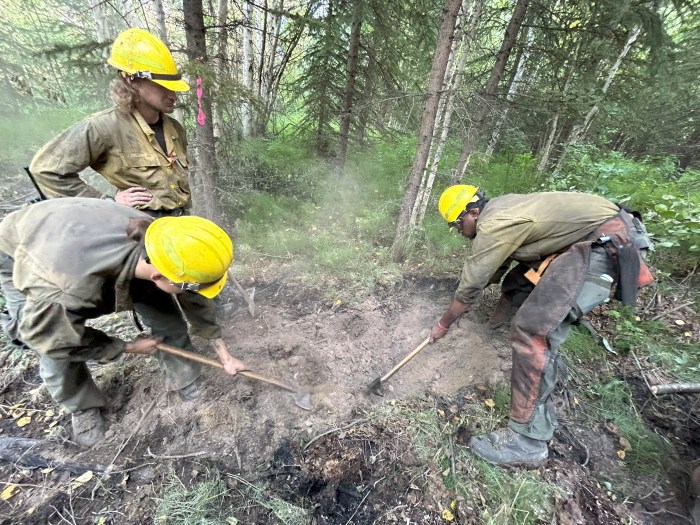
- Ash Pits: These can be nearly invisible, especially in low light. They are created when a ground fire consumes underground fuels, leaving a hidden, superheated hole filled with ash and embers. Stepping into one can cause severe burns.
- Fire-Weakened Trees (Snags): Even if a tree appears to be standing, its root system or lower trunk may have been burned and weakened. These trees can fall without warning, especially in windy conditions, and can lead to a domino effect of falling trees.
- Unstable Terrain: The soil in burned areas is often compromised, making it prone to erosion. There are also areas where the landscape has gone through suppression repair to minimize the erosion impacts, but these areas should be avoided to help the landscape recover. Slopes and trails may be unstable, and there may be hidden holes or tripping hazards from burned-out root systems.
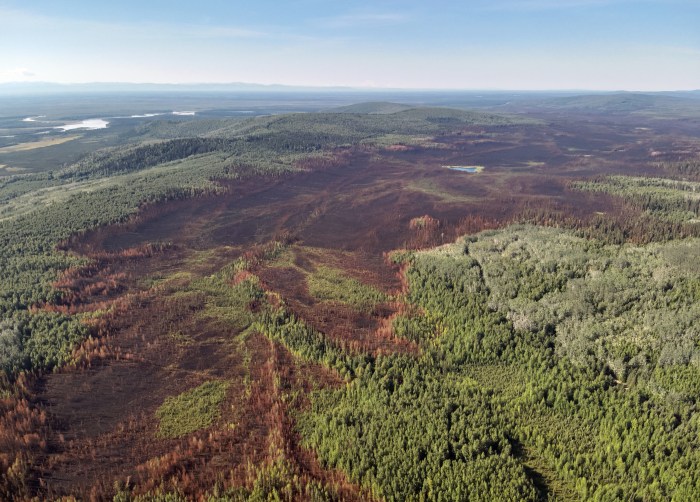
Stay safe by being aware of these risks and taking precautions when in the field.
Categories: AK Fire Info
 Alaska Wildland Fire Information