While much of Alaska still has snow on the ground, conditions are changing quickly. Along the southern coastline, snow is melting fast and exposing dry grasses and vegetation. These fuels can dry out in just a few hours of sunshine and become highly flammable, increasing the risk of wildfires across the state.
As of April 1st, Alaska’s wildland fire season is officially underway, and burn permits are now required statewide.
There has already been three human-caused wildfires reported in Alaska this year, a reminder that fire risk can begin earlier than many expect. As conditions change, now’s a good time to think about how and when you burn.
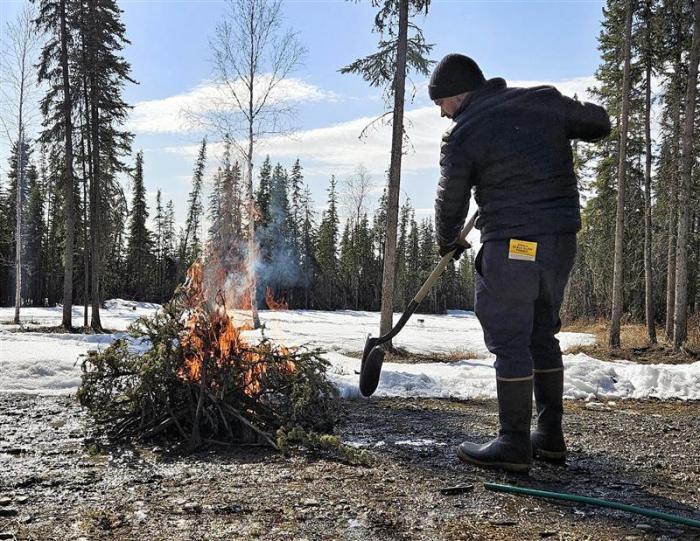
Burn Permits
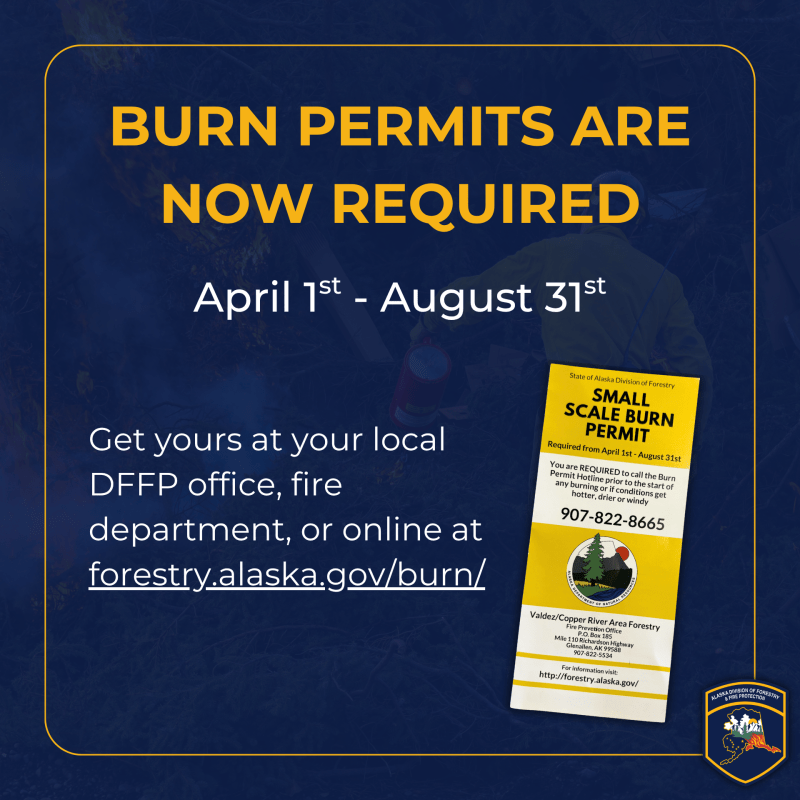
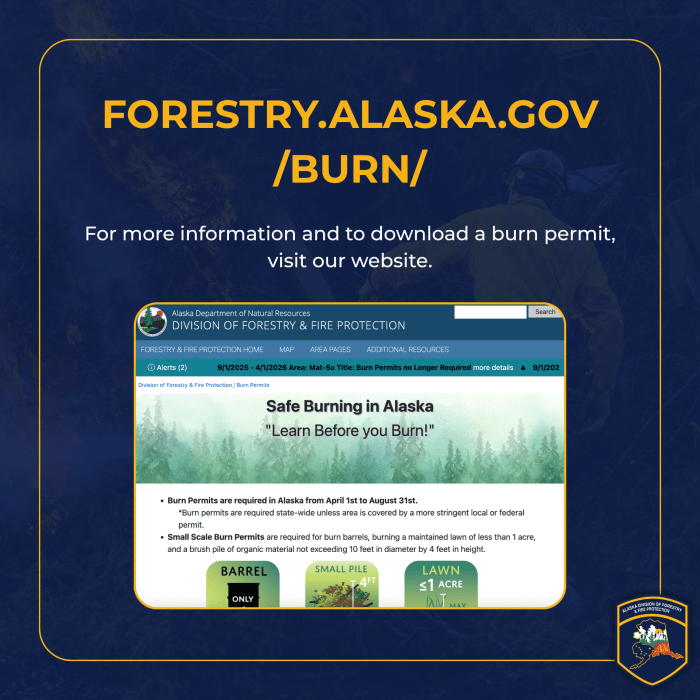
Burn permits are free and required for most open burning in Alaska from April 1st through August 31st.
Residents can obtain a permit:
• Online at: forestry.alaska.gov/burn
• In person at your local Division of Forestry & Fire Protection office
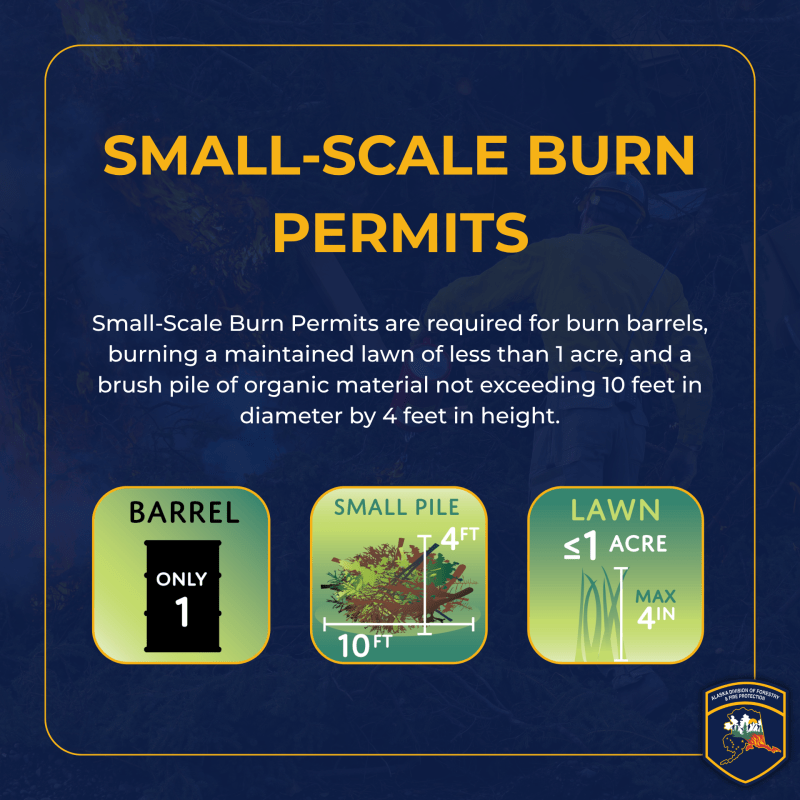
Burn permits are required for:
• Any fire larger than a small campfire (over 3 feet by 3 feet)
• Burn barrels
• Brush piles and yard debris
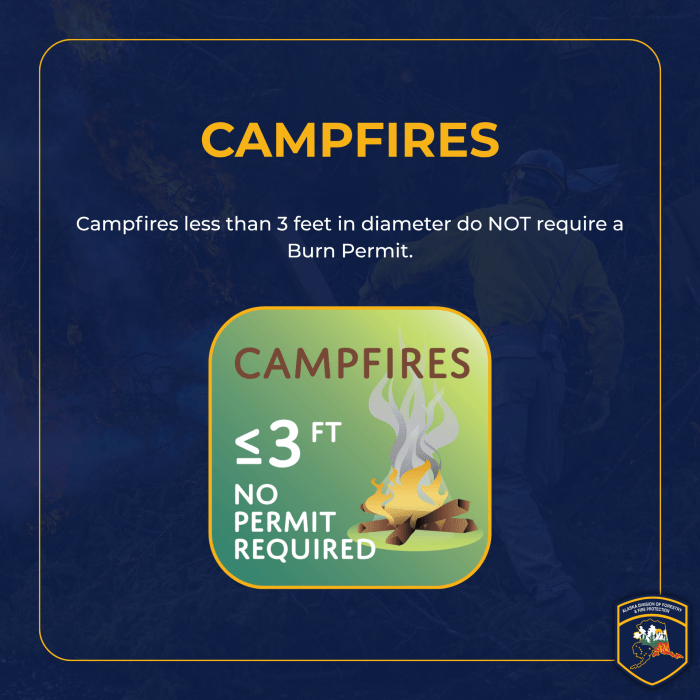
Campfires do not require a permit if they are:
• Less than 3 feet in diameter and have flame lengths under 2 feet
Always check for local restrictions before burning.
Woody Debris Disposal Sites
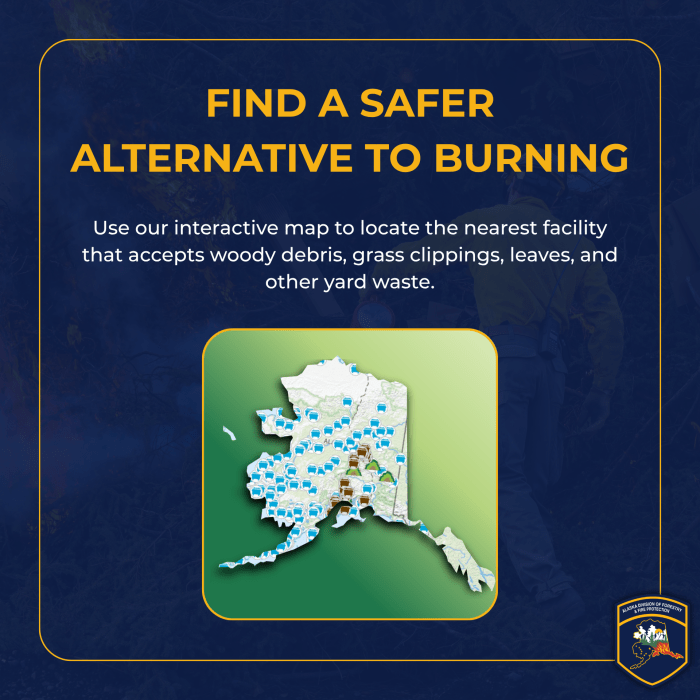
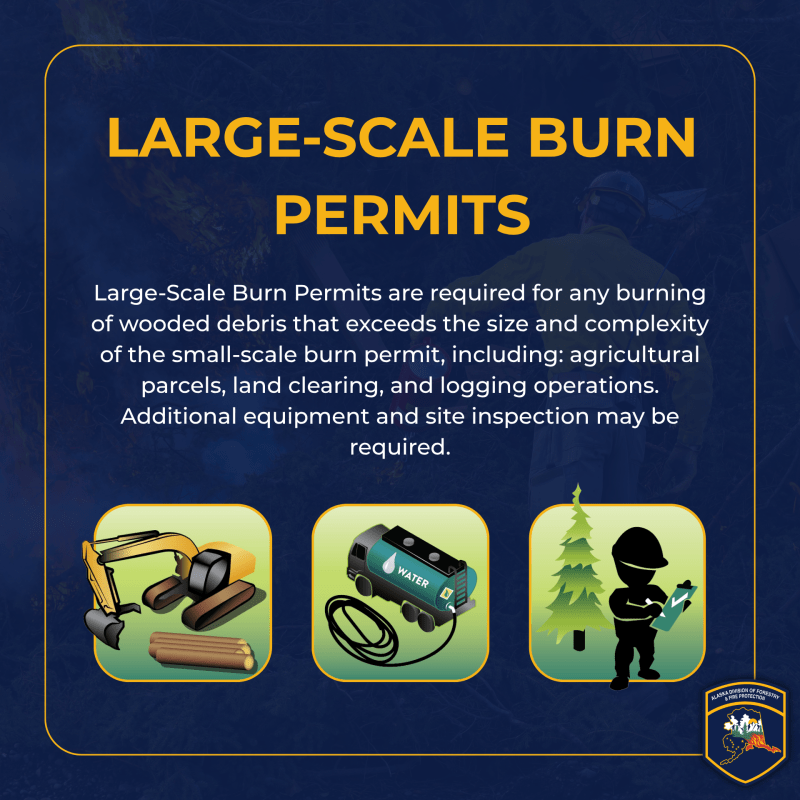
If you’re cleaning up your property this spring, consider using a woody debris disposal site instead of burning.
These sites provide a safer way to dispose of brush and yard debris under controlled conditions.
Find locations here: https://bit.ly/4cf7wRw
Campfire Safety
Even small campfires can escape, especially during spring when dry grass and duff are exposed.
• Only build campfires when conditions are safe
• Build fires on gravel or bare dirt, not grass, moss or leaves
• Keep fires small and manageable
• Clear the area around your fire
• Never leave a fire unattended
• Drown, stir, and feel until cold
Preventing Wildfires Starts With You
Most spring fires are human caused and preventable.
- Properly dispose of cigarettes
- Secure trailer chains to prevent sparks
- Check spark arresters on equipment
- Keep dry grass and debris cleared from vehicles and equipment
Alaska’s fire season is already beginning in some areas, even with snow still on the ground. As conditions continue to dry, the risk will increase.
Small choices matter this time of year. Whether it’s how you burn, where you park, or how you put out a fire, it all adds up.
Let’s work together to keep our communities safe this season.
Take time to learn before you burn.
Categories: AK Fire Info
 Alaska Wildland Fire Information