Author Archives
The U.S. Wildland Fire Service in Alaska (USWFS) is located at Fort Wainwright, Alaska, provides wildland fire suppression services for over 244 million acres of Department of the Interior and Native Corporation Lands in Alaska. In addition, USWFS has other statewide responsibilities that include: interpretation of fire management policy; oversight of the BLM Alaska Aviation program; fuels management projects; and operating and maintaining advanced communication and computer systems such as the Alaska Lightning Detection System. AFS also maintains a National Incident Support Cache. The U.S. Wildland Fire Service in Alaska provides wildland fire suppression services for America’s “Last Frontier” on an interagency basis with the State of Alaska Department of Natural Resources Division of Forestry & Fire Protection, U.S. Forest Service, National Park Service, Bureau of Indian Affairs, U.S. Fish and Wildlife Service, and the U.S. Military in Alaska.
-
Community meeting about Lush Fire planned for today in Rampart
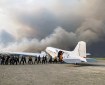
There will be a community meeting in Rampart at noon today, where fire managers will update residents about the efforts to protect allotments and structures from the Lush Fire (#199). The location is to be determined.
-
BLM Alaska Fire Service manages multiple fires near Huslia amid high statewide activity
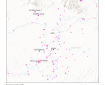
With all available Alaska crews either assigned or mobilizing to wildfires, additional assistance is arriving from the Lower 48. This includes the Southwest Type 3 Incident Management Team, which is slated to assume management of efforts to protect Huslia and numerous Alaska Native allotments in the fire area. Many of these allotments are located along the nearby Koyukuk River between Huslia and the affected area.
-
Part of Salcha River remains in Level 2 “SET” status due to Ninetyeight Fire

Ten smokejumpers worked Saturday to protect structures and Native allotments along the Salcha River from the Ninetyeight Fire (#218).
-
BLM AFS monitoring wildfire near Marion Creek campground at mile 180 Dalton Highway
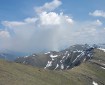
BLM Alaska Fire Service is monitoring the Marion Fire (#295), a new wildfire burning approximately 7 miles east of the Marion Creek Campground near Mile 180 of the Dalton Highway 10 miles northwest of Coldfoot.
-
More resources mobilizing to group of fires near Central, Circle
Firefighting resources – including a Type 3 Incident Management Team composed primarily of Alaskans – are mobilizing in response to extreme fire behavior from the Ikheenjik and Turtle Fires, which made a push toward the Steese Highway near Mile 140 by Birch Creek. Once in place, the team will assume management of a cluster of wildfires now grouped under the Ptarmigan Complex.
-
Firefighters work to protect allotments, structures from Lush Fire near Rampart
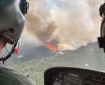
The Lush Fire (#199) remained active until about midnight, fire managers said Saturday. The fire is still north of the Yukon River across from Rampart. It is estimated at 645 acres.
-
Ready evacuation warning issued Friday in area surrounding Central due to uptick in fire activity
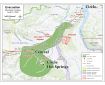
Due to increased fire activity from a group of wildfires burning near Central and Circle, State of Alaska Emergency Operations Center has issued a Level 1 “Ready” evacuation area impacted by the six fires in the area.
-
Four smokejumpers on ground near Salcha River cabin threatened by nearby wildfire
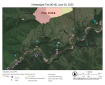
Four smokejumpers are on the ground and beginning structure protection efforts at a cabin near Mile 34 on the Salcha River, about one mile south of the lightning-caused Ninetyeight Fire (#218), which is burning near the border of the Yukon Training Area east of Eielson Air Force Bas
-
More resources arrive in Rampart as multiple fires burn in the area
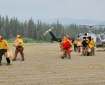
A small Type 3 Incident Management Team – composed primarily of BLM AFS personnel – is now in place to coordinate efforts to protect Rampart and several Alaska Native allotments threatened by the fires.
Additional ground support arrived Thursday, including the BLM AFS Midnight Sun Hotshots and the North Star Fire Crew, a BLM AFS Type 2 training crew. Each crew brings approximately 21 firefighters to assist with protection efforts.
-
BLM AFS monitoring lightning-caused fire in remote section of Yukon Training Area
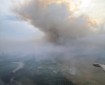
BLM Alaska Fire Service is closely monitoring the Ninetyeight Fire (#218), a lightning-caused wildfire burning in a remote corner of the Yukon Training Area, north of the Salcha River. The fire is located approximately 1.5 miles north of a cabin situated on the north side of the river near the mouth of Flat Creek, about 35 miles upriver.

