The cooler temperatures and less lightning are welcome in Interior Alaska as firefighting resources move around to more active fires or those threatening sites identified for protection. BLM Alaska Fire Service is wrapping up work on some fires and mobilizing to replace smokejumpers to put back into the line-up for response to new starts if needed.
After four straight days of 5,000-18,000 lightning strikes across Alaska, only about 800 bolts were recorded on Friday. Wetter weather will make an appearance throughout most of Alaska this weekend, but the Yukon Flats and Tanana Valley is expected to remain warm and mostly dry. There is also wind in the forecast, which has been relatively absent this week. This could initiate movement on existing fires that have already seen increased activity in the afternoon. This includes Alaska Division of Forestry & Fire Protection managed fires that generated evacuation orders within the Denali Borough and Fairbanks North Star Borough.
As of today, 267 fires have burned about 23,206 acres statewide. There were 11 new starts Friday with four falling within BLM AFS’s 191.5 million acre protection area in the remote northern half of the state, a decrease from previous days. There were six new fires and almost 900 lightning strikes reported by 4 p.m. Saturday.
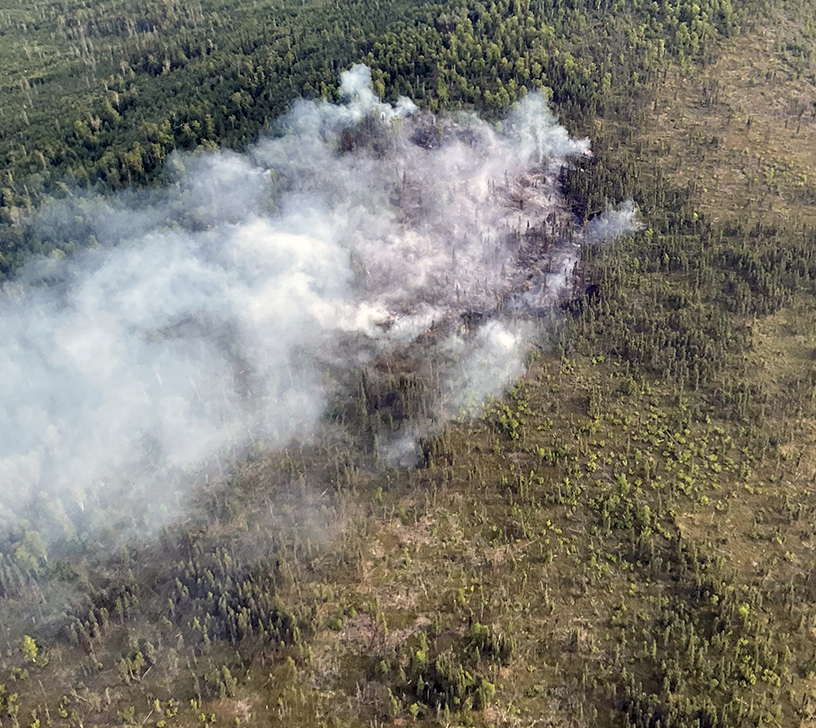
Firefighters are starting to see the effects of several days of hot weather. Smokejumpers on the Vigor Fire (#298) near the Tolovana Hot Springs reported the fire was burning deep enough to produce ash pits around spruce tree roots, causing some standing dead trees to topple. This indicates that this week’s heat is drying deeper in the duff layer – the partly decayed organic material layer beneath the litter of freshly fallen twigs, needles and leaves. Most wildfires have burned predominantly surface vegetation and surface ground layers so far this year. With the warm weather forecasted to continue in the Interior, this drying of deeper ground layers may become a factor and make wildfires harder to extinguish.
The Type 2 BLM-contract Mooseheart Crew is moving to the Vigor Fire today after the Moose Fire on the Elliott Highway is called contained and controlled.
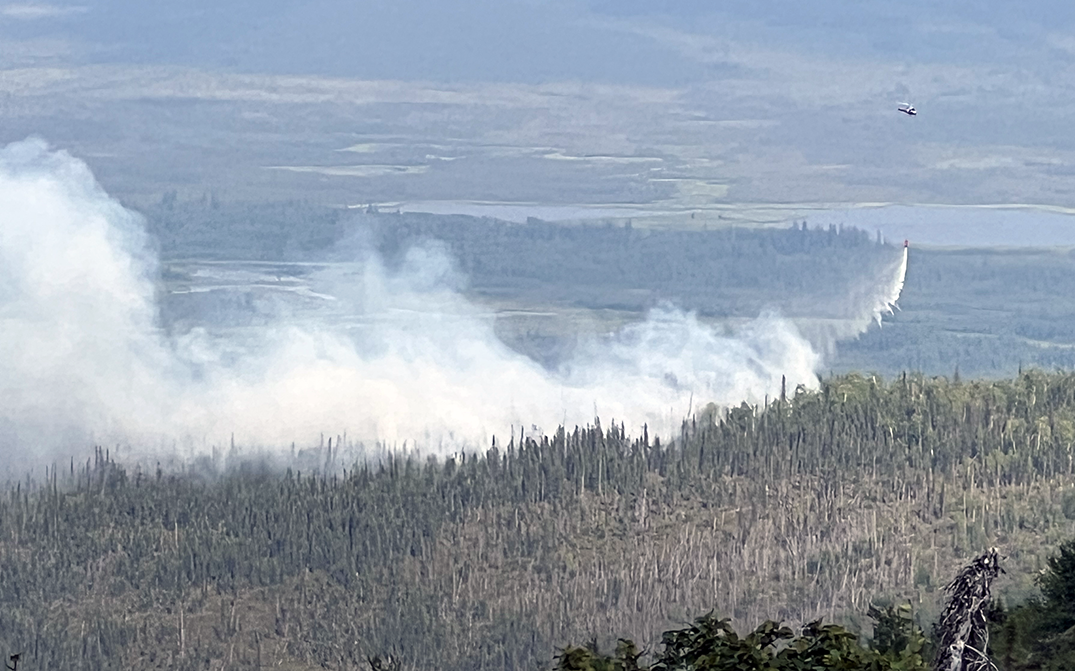
Four smokejumpers deployed Friday night were able to stop the Vigor Fire from growing and are working on extinguishing hot spots and working on containment. Complicating the process is the lack of water nearby. Instead, a helicopter will drop water from large buckets to support work on the ground.
A 10-person all-women’s Student Conservation Association crew out of the Alaska National Parks is mobilizing today to protect historic mining from the Ikheenjik Fire (#234). This 95-acre fire is burning on BLM-managed lands about 2 miles south of mile 94 Steese Highway east of the Ikheenjik River, formerly known as the Birch Creek Wildland Scenic River. The fire is burning in a limited management option area, meaning it’s allowed to function in its natural environment. Instead, the crew plus three experienced firefighters in leadership positions will focus on prepping the historic cabins in the likelihood they’re threatened by the fire. This will be the first time the crew has been on a fire, giving its members their first taste of wildland firefighting.
The BLM AFS Type 2 North Star Fire Crew is headed to the Brooks Fire (#284) burning near Livengood today to replace the smokejumpers on the fire. They’ll continue mopping up this 5-acre fire.
The four smokejumpers on the 2-acre Susie Fire (#256) are adding depth to the burned buffer inside the fire perimeter, mopping up and working towards containment of this fire burning north of Rampart.
Meanwhile, BLM AFS personnel are conducting several flights every day to verify fires that were recently reported, check on existing unstaffed fires and survey areas that experienced lightning that may have sparked holdover fires.
Due to Alaska’s vast, remote wilderness, and with resources on higher priority fires that are burning close to communities, many remain unstaffed as long as they’re not threatening any nearby sites of value.
This applies to the Lower Birch (#291) and Kocacho (#292) fires burning the Yukon Flats in northeastern Alaska. Due to the lack of resources, these fires are not staffed but will be monitored in case they threaten cabins and Native allotments in the vicinity. At which time action will be considered to protect these sites from the fires.
The 40-acre Kocacho Fire is burning 12 miles southeast of Venetie and the 100-acre Lower Birch Fire is about 13 miles east of Beaver. The Lower Birch Fire is burning in a riparian area about four miles from the nearest Native allotment.
When possible, wildland fires are allowed to function in the natural process that is important for the survival of many plans and animals in the boreal and tundra ecosystems of Alaska, especially when other fires are threatening people and property. Of the 123 active fires statewide, 65 are burning in a limited management option area which allows fires to function in its natural ecological role.
Contact BLM AFS Public Affairs Specialist Beth Ipsen at (907)356-5510 or eipsen@blm.gov for more information.
Categories: Active Wildland Fire, AK Fire Info
 Alaska Wildland Fire Information