A change in weather has brought cooler temperatures, higher relative humidity, and scattered precipitation to the Ptarmigan Complex. These conditions have moderated fire behavior and given firefighters the opportunity to engage in direct tactics on the Turtle Fire (#243).
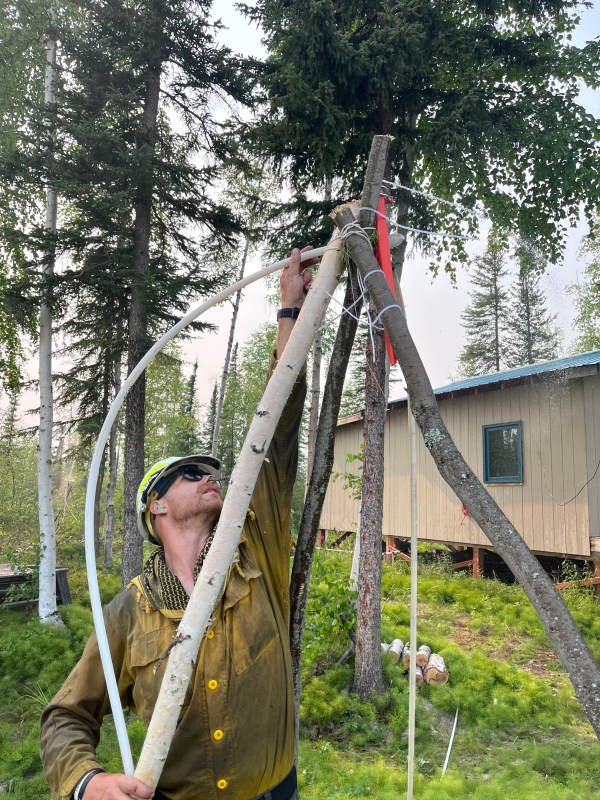
Turtle Fire (#243) – With the change in weather providing moderated fire activity, the Smith River and Tatanka Hotshots engaged the north edge of the fire using direct tactics. The crews are steadily working to the east utilizing Birch Creek as a holding feature, looking to cut off the fire from moving north. Aerial support was unable to assist ground efforts due to limited visibility from a smoke inversion. Indirect reinforcement continues around the Alaska Native allotment boundary near Mile 148 on the Steese Highway by removing fuels, setting up sprinklers, hoses, and pumps. Fire resources remain ready and prepared for backburn operations to defend property and structures or to strengthen and reinforce the edge of the line.
Firefighters continue to patrol along the Steese Highway in between Circle and Central, assessing structures and property and taking actions to further improve defensible space.
Firing operations continue to move south, heading upriver along the east bank of Birch Creek in order to prevent major runs from occurring on the southern edge. Crews have engaged and controlled any spot fires that have gone over the west bank of Birch Creek. No major fire growth occurred in the south portion of the fire.
Fire behavior was more active on tundra than previous days, which caused increased growth to the east. As the fire moves towards the Yukon River, it crosses a flat area with many water features. Firefighters have been preparing structures and properties along the west bank of the Yukon by setting up pumps, hoses, sprinklers, and removing fuels.
The Turtle Fire was started by lightning. It was reported on June 19 and is burning about 10 miles east of Central and 12 miles south of Circle.

Alligator Fire (#265) – Firefighters continue to engage in mop up operations with a goal of 100 feet of depth around the west edge of the fire. On the northeast portion of the fire, work continues to be done to secure the line to achieve further containment. The fire is about 3 miles north of Central. It was started by lightning and was discovered on June 20
Birch Fire (#256) – The fire showed moderate fire activity and grew slightly to the northwest, where it had grown to cross over a piece of indirect line. That section of fire over the line has burnt into a pocket of hardwood and then slowly moved into the tundra by the end of the day. Fire resources continue to monitor the northwest edge and will take action if deemed necessary. The fire has been secured around the west and southwestern portions of the line. The containment percentage has been reduced slightly due to the increase in acreage. The fire is located about 4 miles northwest of Circle and is being monitored by aerial resources when conditions allow. It was discovered on June 20 and was caused by lightning.
Buckley Bar (#264) – The fire lies 17 miles to the southwest of Central and was added to the Ptarmigan Complex on July 7. The fire is currently being managed under a point protection strategy, as historic structures are present nearby. Today, firefighters plan to insert by helicopter to assess structures and begin protection if conditions allow. Fire growth was primarily on the northeast edge of the fire, exhibiting moderate activity. It was discovered on June 20 and was caused by lightning.
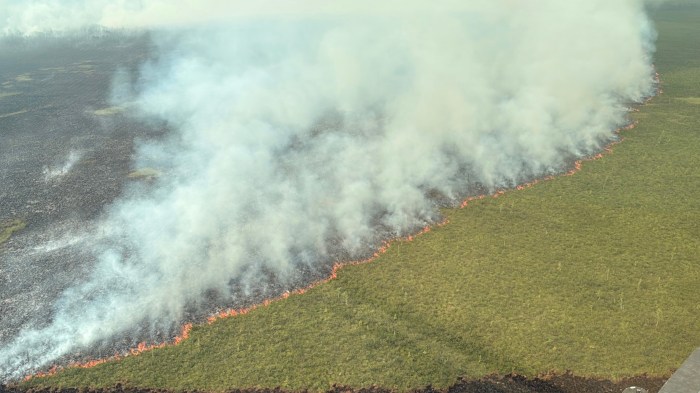
The Deadwood Fire (#214) is being monitored. The Ketchem Fire (#240) and Little Mosquito Fire (#241) are out.
Rain is expected in the coming days to the Ptarmigan Complex, but coverage could be variable. Fire activity will be dependent on the amount of precipitation received across the complex. Significant fire growth is not predicted due to lower temperatures, but outflow winds from storms could push the fire in different directions.
The Alaska Fire Service Interagency Type 3 Incident Management Team assumed command of the Ptarmigan Complex on July 7.
A Level 1 “Ready” Alert remains in effect for the community of Central, the Steese Highway from Milepost 123 to Milepost 151, Circle Hot Springs Road and Circle Hot Springs, and Deadwood Creek Road. Drivers should expect traffic delays on the Steese Highway, Circle Hot Springs Road, and Deadwood Creek Road due to firefighting operations. A Level 1 “Ready” alert means: begin preparing for a potential evacuation; make plans for family members with special needs, pets, or livestock; gather essential items such as prescriptions, important documents, and valuables; and stay alert and watch for updates from local authorities.
NOTAM #06/201 is in place for the Central Airport (CEM): Increased air traffic 5,000 ft MSL and below within a 20 nautical mile radius of the Central Airport (CEM) due to firefighting aviation operations
-BLM-
Need public domain imagery to complement news coverage of the BLM in Alaska? Visit our Flickr channel!
Learn more at www.blm.gov/Alaska, and on Facebook, Instagram, Twitter, and YouTube.
The BLM manages more than 245 million acres of public land located primarily in 12 western states, including Alaska, on behalf of the American people. The BLM also administers 700 million acres of sub-surface mineral estate throughout the nation. Our mission is to sustain the health, diversity, and productivity of America’s public lands for the use and enjoyment of present and future generations.
Categories: Active Wildland Fire, AK Fire Info, BLM Alaska Fire Service
 Alaska Wildland Fire Information