While fire activity has moderated across much of the BLM Alaska Fire Service protection area, 166 fires remain active within the 191.5 million-acre zone — an area larger than Texas. Currently, 266 personnel are assigned to four fires, but that number is expected to drop after the weekend as crews wrap up work protecting communities and valuable sites.
With warmer, drier weather on the horizon, especially in northeastern Alaska, where wind gusts up to 20 mph and temperatures in the low 80s are forecast, fire managers urge residents and visitors to stay alert. These conditions could lead to increased activity on existing fires and the rapid growth of new ones.
As resources downsize, fire managers remain confident in the solid progress crews have made. BLM AFS will continue to monitor conditions closely and adjust resources as needed. Staying prepared is essential, as Alaska remains in fire season.
To date, 404 fires have burned nearly 1 million acres across Alaska. Of those, 196 fires are within the BLM AFS protection area, accounting for 635,840 acres burned.
Here’s an update on priority fires in BLM AFS’s protection area.
Ptarmigan Complex
Firefighters continue to monitor fires, backhaul equipment, and identify opportunities to repair suppression work where appropriate as they keep a watchful eye on the warmer weather predicted for this weekend and the beginning of next week.
Twenty-eight personnel remain on the 50,590-acre complex after moderating fire behavior and progress made by crews has allowed for some firefighters to be released, including the Alaska Range Suppression Module out of Denali National Park and Preserve. A team addressed hotspots found on the Alligator Fire (#265) Thursday and began removing equipment on the north edge of the Turtle Fire (#243) where work has been completed, and the equipment is no longer needed.
Today, crews will continue to remove equipment on the north edge of the Turtle Fire; additionally, they plan to remove equipment along a Alaska Native allotment and address impacts to wildlife movement from prior protection efforts near that allotment, which is no longer threatened by wildfire. A heavy equipment operator will repair bulldozer line on the Deadwood Fire (#214) beginning Friday.
Fire breaks have been constructed around 26% of the fire perimeters within the Ptarmigan Complex. A Type 4 management organization remains in place to ensure overall incident objectives are achieved, including protecting communities from wildfire and limiting impacts to cultural and historical sites. Despite minimal fire activity, warmer, drier, and windier weather in the area means fire managers are watching for and ready to respond to new starts.
Read all the Ptarmigan Complex updates here. Find a PDF of today’s Ptarmigan Complex here.
Lush Fire (#199)
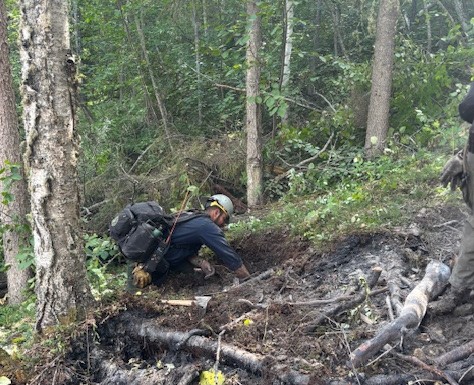
This lightning-caused fire, discovered on June 18, is estimated at 26,585 acres and is burning across the Yukon River from Rampart. While cooler, wetter weather has moderated fire behavior, the fire remains active. Crews continue working to protect Alaska Native allotments and structures in the area.
There were 93 personnel assigned to the fire as of this morning, a number expected to drop significantly as crews finish their work and begin removing equipment no longer needed.
The BLM Type 2 Clearwater contract crew — composed of firefighters from Marshall, Pilot Station, St. Mary’s, and Mountain Village — is demobilizing today. The Wyoming Hotshots are finishing up their final tasks and plan to head home Sunday. The BLM AFS Chena Hotshots will remain on the fire, working to complete a fire break directly on the fire’s edge and eventually tying in with the line established by the Wyoming Hotshots.
Crews have also been mopping up and extinguishing hot spots along the fire perimeter closest to the allotments and constructing additional fire line in preparation for warm, windy conditions forecast in the coming days. These conditions could increase fire activity and bring smoke into Rampart.
Read all the Lush Fire updates here.
Ninetyeight Fire (#218)
The last hand crew – the Tatanka Hotshots from South Dakota – are demobilizing today as work wraps up for this 15,000-acre fire burning north of the Salcha River southeast of Fairbanks. A helitack crew from the Shasta-Trinity National Forest in California will remain at the fire over the weekend in case there’s an uptick of activity due to the predicted warmer weather.
Work has concentrated on protecting the numerous cabins along the river and some military sites in the Yukon Training Area east of Eielson Air Force Base. The lightning-caused fire was discovered on June 19.
The Fairbanks North Star Borough has a Level 1 “Ready” Evacuation in place for the Middle and Lower Salcha River due to the limited fire activity in the area. To find your property check the evacuation map here: bit.ly/3GfwZyt
Read all the Ninetyeight Fire updates here.
Goldrun Complex
Work continues today on this complex of nine fires burning between Ambler and Kiana in northwest Arctic. The Wyoming Type 3 Incident Management Team transferred management of the complex today to a smaller team made up mostly of BLM AFS personnel. Crews are currently removing equipment and repairing suppression actions on the Nuna Fire (#420) and Onion Fire (#433).
Approximately 70 personnel were assigned to the fire this morning with that number shrinking throughout the day.
The Nuna Fire is 14,884 acres and burning due west of the Jade Mountains, north of the Kobuk River. The 1,307-acre Onion Fire is burning south of the Kobuk River.
The 11,858-acre Kaliguricheark Fire (#410) — which burned through the Kobuk Fire (#411), Hunt Fire (#409), and Tutuksuk Fire (#424 ) — is now in monitor status. The Jade (#407), Karet (#408), and Salmon (#423) fires are contained and controlled, and are also being monitored.
Read all the Goldrun Complex updates here.
Roundabout Complex
About 62 people are assigned to this complex of fires burning near Huslia, with all but the 72,875-acre Moldy Fire (#279) in monitor status. The Flagstaff Hotshots and the BLM AFS Midnight Sun Hotshots have been mopping up and securing fire lines around Native allotments in the northern and southern divisions.
The area is experiencing cooler, wetter weather, with more forecasted to aid firefighters’ work on the ground.
The Moldy Fire, discovered on June 20, is burning on the opposite side of the Koyukuk River from Huslia.
Read all the Roundabout Complex updates here.
–BLM–
Bureau of Land Management, Alaska Fire Service
P.O. Box 35005 1541 Gaffney Road, Fort Wainwright, AK 99703
Need public domain imagery to complement news coverage of the BLM Alaska Fire Service in Alaska? Visit our Flickr channel!
Learn more at http://www.blm.gov/AlaskaFireService, and on Facebook.
The Bureau of Land Management Alaska Fire Service (AFS) located at Fort Wainwright, Alaska, provides wildland fire suppression services for over 240 million acres of Department of the Interior and Native Corporation Lands in Alaska. In addition, AFS has other statewide responsibilities that include: interpretation of fire management policy; oversight of the BLM Alaska Aviation program; fuels management projects; and operating and maintaining advanced communication and computer systems such as the Alaska Lightning Detection System. AFS also maintains a National Incident Support Cache. The Alaska Fire Service provides wildland fire suppression services for America’s “Last Frontier” on an interagency basis with the State of Alaska Department of Natural Resources, USDA Forest Service, National Park Service, Bureau of Indian Affairs, U.S. Fish and Wildlife Service, and the U.S. Military in Alaska.
Categories: Active Wildland Fire, AK Fire Info
 Alaska Wildland Fire Information