Author Archives
The U.S. Wildland Fire Service in Alaska (USWFS) is located at Fort Wainwright, Alaska, provides wildland fire suppression services for over 244 million acres of Department of the Interior and Native Corporation Lands in Alaska. In addition, USWFS has other statewide responsibilities that include: interpretation of fire management policy; oversight of the BLM Alaska Aviation program; fuels management projects; and operating and maintaining advanced communication and computer systems such as the Alaska Lightning Detection System. AFS also maintains a National Incident Support Cache. The U.S. Wildland Fire Service in Alaska provides wildland fire suppression services for America’s “Last Frontier” on an interagency basis with the State of Alaska Department of Natural Resources Division of Forestry & Fire Protection, U.S. Forest Service, National Park Service, Bureau of Indian Affairs, U.S. Fish and Wildlife Service, and the U.S. Military in Alaska.
-
Firefighters prepare for drier, hotter weather on Dry Creek Fire
Firefighters are wrapping up work to make sure fire control lines help keep the more than 51,000-acre Dry Creek Fire (#195) in check during the hotter, drier weather predicted to start this weekend. Fire managers don’t expect significant fire growth despite the warmer weather thanks the firefighters’ hard work and the Zitziana River to the east and an area burned in 2018 to the southwest.
-
Cooler, wetter weather subdues Dry Creek Fire
The cooler, wetter weather has greatly reduced fire behavior on the Dry Creek Fire in the past few days. Due to this, the number of personnel working on the fire has decreased as people have started to hit the end of their 14-day assignment.
-
Firefighters mopping up Deadwood Fire near Central
Firefighters are mopping up the Deadwood Fire (#315) after a quick response by BLM Alaska Fire Service Friday kept it limited to 33 acres.
-
Aggressive ground, air attack quells new fire southwest of Chalkyitsik
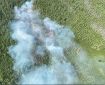
Using an aggressive ground and air attack, firefighters were able to quickly quell a small fire burning about 13 miles southwest of Chalkyitsik and about 32 miles east of Fort Yukon Sunday. The Grass River Fire was kept to 1.8 acres.
-
Dry Creek Fire south of Manley calms after a few busy days
Fire activity moderated on the Dry Creek Fire (#195) a few days of substantial growth. The fire burned approximately 15,800 acres since June 30 – mostly to the west – and was estimated at 45,643 acres by the end of Saturday
-
Smokejumpers, aircraft corral new wildfire near Central
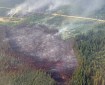
Smokejumpers, aided by aircraft, were able to corral the Deadwood Fire (#315) burning near Central late Friday night. Firefighters will spend Saturday tracking down any spot fires that sprung up outside the main fire’s perimeter and making sure the sawed control line around the main fire holds. The BLM Alaska Fire Service Midnight Sun Hotshots will join the 16 smokejumpers on the ground today to help work toward the goal of making sure the 33-acre fire is completely extinguished.
-
BLM AFS monitoring fire on military training lands about 13 miles south of Chena Hot Springs Road
The BLM Alaska Fire Service is keeping an eye on a new fire burning in the military training lands about 13 miles south of the Chena Hot Springs Road. The Stuart Creek Fire (#308) started on Thursday and is burning in pocket of vegetation that was previously left untouched by the 2013 Stuart Creek 2 Fire.
-
Ground, air efforts successful in slowing new fire near Central
mokejumpers and aircraft are aggressively attacking a new wildfire burning south of Central. Sixteen smokejumpers, six water-dropping Fire Boss aircraft, and an air tanker are busy trying to keep the Deadwood Fire (#315) limited to the 40 acres it’s already burned.
-
Use of fireworks is prohibited in many parts of Alaska during the fire season
While there isn’t a statewide fireworks ban in place for this coming Independence Day weekend, there are several existing regulations don’t allow these “illuminations” in most parts of Alaska during the summer.
-
Dry Creek Fire south of Manley grows significantly due to hot, dry weather
The Dry Creek Fire burning south of Manley Hot Springs was active Thursday, gaining about 8,000 acres; mostly to the west. The fire is still south of the Tanana River and west of the Zitziana River, which is two of the goals for firefighters managing the 40,459-acre lightning-caused fire. Another is to protect cabins and Native allotments in the area.
 Alaska Wildland Fire Information