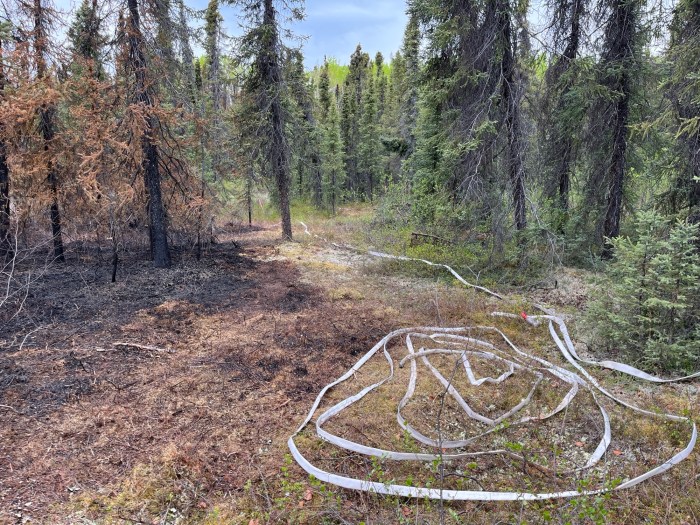
Fire activity is winding down, possibly temporarily, across the state thanks to strong firefighting efforts and cooler weather. Only two fires remain staffed: the Kopshesut Fire near Ambler and the Clums Fire about 66 miles northeast of Fairbanks. Firefighters on both incidents are mopping up hotspots and plan to demobilize in the coming days.
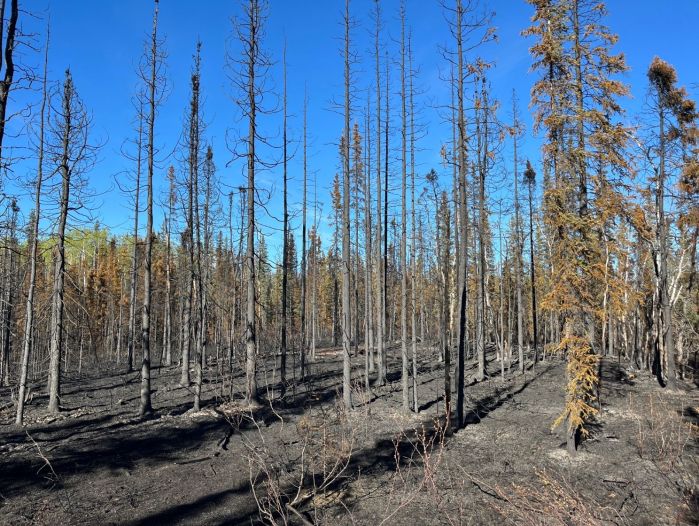
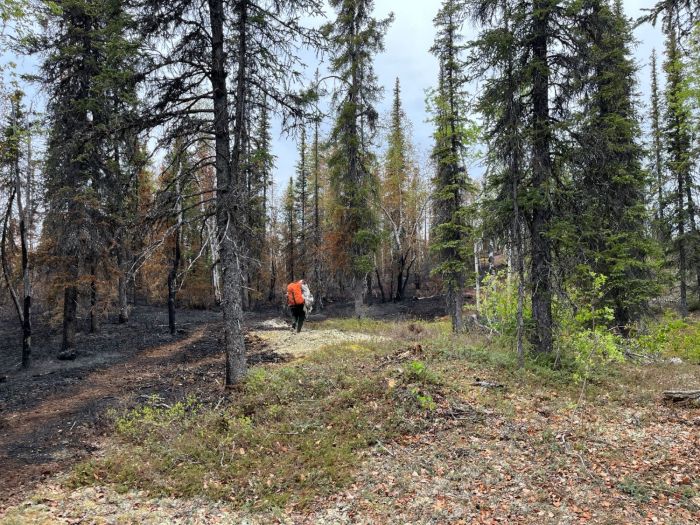
Kopshesut Fire #137 (Ambler)
The Kopshesut Fire is 80% contained with 42 personnel assigned, primarily from the Midnight Sun Hotshots and the North Star Fire Crew. The fire started June 4 after escaping the Ambler landfill and quickly grew to roughly 500 acres. It has held at about 1,440 acres for more than a week.
The Midnight Sun Hotshots will demobilize tomorrow, leaving the U.S. Wildland Fire Service training crew, the North Star Fire Crew, to reinforce and secure the control line. Their objective is to remove all remaining heat up to 300 feet inside the perimeter before the fire can be declared fully contained and controlled.
Clums Fire #184 (Northeast of Fairbanks)
Eight smokejumpers contained the approximately 224‑acre Clums Fire on Sunday night. They are conducting a grid search for remaining hotspots and expect to demobilize Tuesday.
The USWFS launched a significant initial attack Saturday —smokejumpers, four single‑engine scoopers, and two Alaska Division of Forestry & Fire Protection air tankers — to stop rapid spread in tundra and pockets of black spruce on BLM‑managed land within the Steese National Conservation Area.
The fire lies within a Modified Management Option Area, which calls for suppression in the early season. Three structures and a mining claim are within three miles, and the surrounding area includes critical caribou habitat that can take decades to recover after fire.
Fire Season So Far
So far this year, 150 fires have burned roughly 5,330 acres statewide. The largest is the nearly 2,000‑acre Kilolitna Fire (#177) burning in the Kanuti National Wildlife Refuge in the Central Interior. Another nearby and visible fire is the approximately 200‑acre Canyon Fire (#174) burning north of the Yukon River about 20 miles west of Rampart. Both are in a Limited Management Option Area and, unless they threaten identified sites of value, will be allowed to perform their natural ecological role.
As the state approaches the summer solstice, the USWFS remains ready to respond to new starts in its 191.5 mill acre protection area covering the northern half of the state. Alaska Interagency Predictive Services reports an increasing chance of thunderstorms mid‑week, followed by improved weather in many areas. Lightning associated with these storms could increase fire activity.
Please help prevent wildfires: never leave a fire unattended, ensure it is cold to the touch before leaving, avoid burning on windy days, and follow all Alaska Division of Forestry & Fire Prevention burn permit guidelines and suspensions.
Contact Public Affairs Specialist Beth Ipsen at Elizabeth_ipsen@ios.doi.gov or (907)356-5510 for more information.
-USWFS-
U.S. Wildland Fire Service, P.O. Box 35005 1541 Gaffney Road, Fort Wainwright, Ak 99703
Need public domain imagery to complement news coverage of the USWFS in Alaska? Visit our Flickr channel!
Learn more online, and on Facebook and Twitter.
Categories: AK Fire Info, US Wildland Fire Service

