The recent stretch of lightning and elevated fire weather across Alaska demonstrated why years of investment in firefighters, aviation resources, hazardous fuels reduction, support personnel, and strategic planning matter.
Over several days of heightened fire activity, Alaska Division of Forestry & Fire Protection’s (DFFP) firefighters responded aggressively to more than 50 new wildfire starts while continuing suppression and containment work on existing incidents. Through pre-positioning of firefighters, aviation resources, incident management personnel, and equipment ahead of increasing fire danger, crews were able to keep many new fires small during initial attack.
That level of preparedness helped prevent what could have become multiple large, long-duration incidents across DFFP’s protection areas.
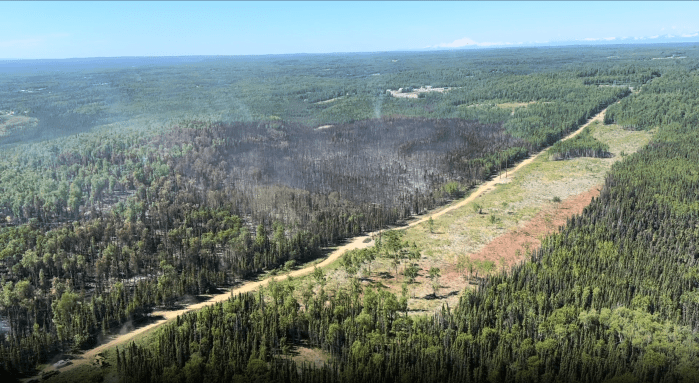
In addition to prepositioning resources, recent work on large-scale hazardous fuel reduction projects aided firefighters in protecting Alaskan communities. On the Starry Fire (#234) near Anderson, firefighters incorporated the community fuel break as part of their suppression strategy to strengthen containment efforts and help protect nearby homes and infrastructure. A key factor in the successful containment of the Grandview Fire (#204) in Sterling was the interagency fuel break constructed in 2019 and 2020. The reduction of hazardous vegetation in the fuel break helped slow fire spread, provided firefighters with a strategic location to safely engage, and played an important role in keeping the fire from advancing north of the powerline corridor. These projects demonstrate how long-term, hazardous fuel reduction investments can provide firefighters with tactical advantages when communities are threatened during dynamic wildfire activity.
Aviation resources also played a critical role throughout the response, supporting initial attack with water bucket operations, retardant delivery, transportation of firefighters and equipment, and rapid response to emerging incidents across the state.
These successes came during a period when firefighting resources were increasingly in demand across the western United States, reinforcing the importance of Alaska maintaining a strong and collaborative in-state firefighting workforce.
“The recent fire activity demonstrated that preparedness pays off,” said Norm McDonald, Deputy Director of the Alaska Division of Forestry & Fire Protection, “We entered the season with firefighters, aviation resources, and equipment positioned where we anticipated increased fire activity. Our crews were able to respond quickly and aggressively to new starts. Combined with years of investment in hazardous fuels reduction and strong partnerships, those efforts helped us keep many fires small and protect communities.”
Alaska still remains in the heart of fire season. Weather conditions continue to support new wildfire starts with new Red Flag Warnings issued today in multiple parts of the state. Firefighters remain prepared to respond wherever needed in partnership with local, Tribal, state, and federal agencies.
The recent period of activity serves as a reminder that wildfire preparedness is built long before the first smoke column appears. Investments in fuels mitigation, aviation, workforce development, training, and coordinated planning all contribute to faster response, stronger initial attack, and better outcomes for Alaska’s communities.
Wildfire preparedness is a shared responsibility.
While firefighters remain ready to respond across Alaska, everyone can help reduce the number of human-caused fires. Follow burn permit restrictions and local fire safety requirements, avoid activities that could ignite wildfires, and stay informed through official DFFP fire information channels. Preventing human-caused wildfires helps conserve firefighting resources and supports firefighter and public safety throughout the fire season.
Categories: Active Wildland Fire, Alaska DNR - Division of Forestry & Fire Protection (DFFP), Fuel Break Project

