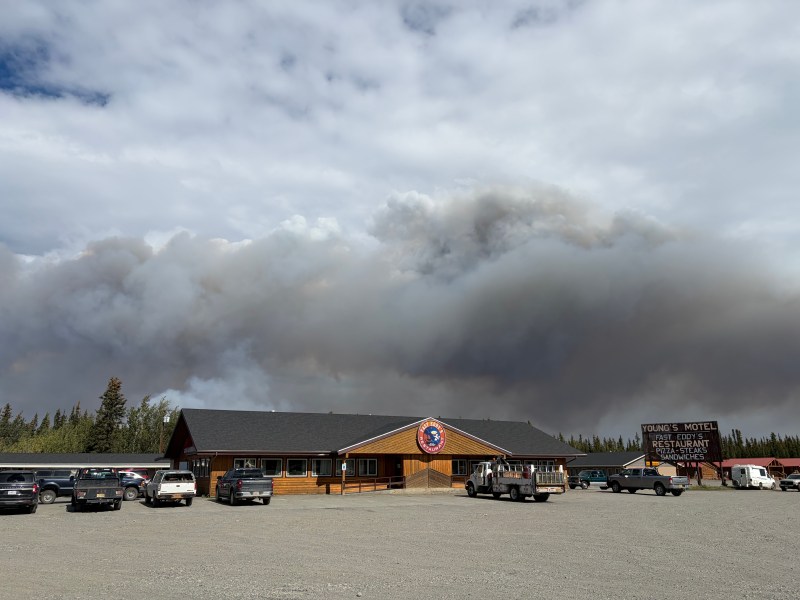
When smoke rises over the Interior, the immediate focus is rightfully on suppression, protection, and evacuation. But behind the immediate suppression efforts lies another vital operation: determining how and why the fire started. In Alaska, every human-caused wildfire triggers a meticulous scientific investigation to identify the origin and cause while strictly adhering to national investigative standards.
The Mukluk Fire, which ignited in the Midnight Sun neighborhood of Tok, Alaska, is a prime example of how local, state, and federal interagency partners unite to conduct a high-stakes origin-and-cause investigation.
Human-Caused Starts: Beyond the Misconception
When wildland fire agencies classify a start as “human-caused,” public perception often leaps straight to arson. In wildland fire investigation terminology, however, “human-caused” distinguishes an ignition from natural events like lightning strikes.
Human-caused fires cover a wide variety of accidental and structural scenarios, including:
- Debris Burning: Escaped burn piles, burn barrels, or agricultural fires.
- Campfires
- Vehicle, structure, and downed powerline fires
- Fireworks, firearms, and signal flares
- Smoking
- Equipment use (sparks from mowers, chainsaws, welding or grinding) or hot parts coming off of vehicles like brake shoes, catalytic converter parts or exhaust pipes coming into contact with dry brush.
- Children Playing with Fire
- Incendiary (arson): The intentional ignition of a fire where one should not be.
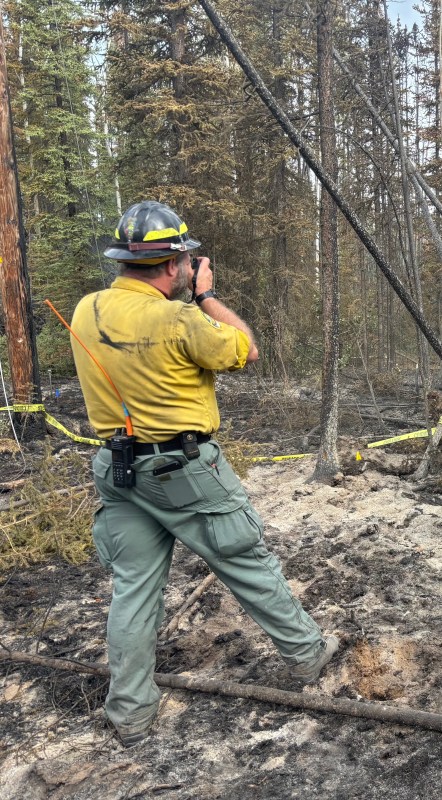
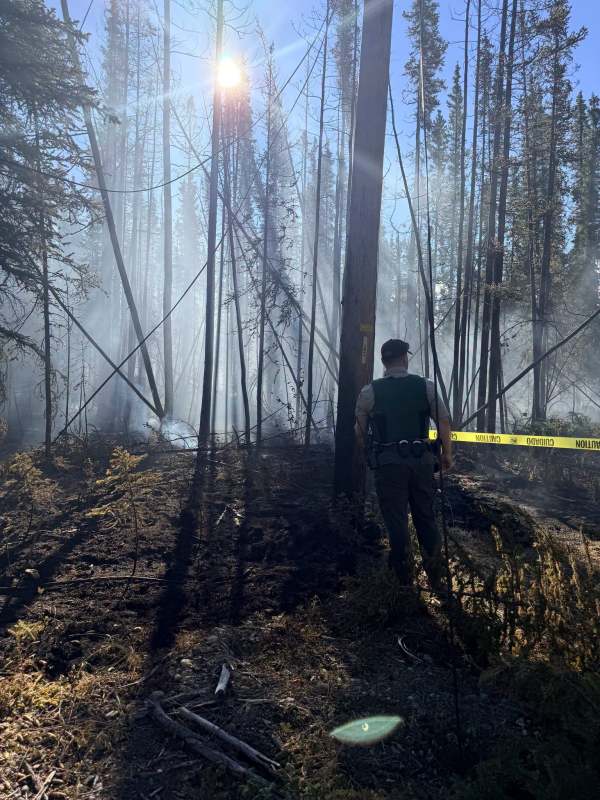
Initial reports for the Mukluk Fire indicated that it was a human-caused start involving powerlines. However, until a thorough investigation has been completed, all potential causes analyzed, and the report finalized, the fire officially remains “under investigation”. This term ensures that a thorough analysis using the scientific method and following industry standards has been undertaken by the investigators before officially stating what caused the fire is released to the public.
Investigators use the scientific method to determine a fire cause by gathering information from witnesses, photos, maps, weather stations, and other means. They then analyze it, develop a hypothesis/theory using the data, test the theory, and review the results. Based on whether the data supports the theory, or not, determines the cause, or in some cases, several possible causes but not any specific one.
Elevating Alaska’s Investigative Capacity and Training through the Muluk Fire
Because the Mukluk Fire caused catastrophic damage in the community, a multi-agency task force of fire investigators was assembled by the Alaska Division of Forestry & Fire Protection (DFFP) to ensure that a detailed and thorough investigation was undertaken. In addition, the DFFP has identified a unique opportunity to expand its own fire investigation program by enlisting the aid of Cal Fire and the Bureau of Alcohol, Tobacco and Firearms (ATF), both of whom are nationally recognized as leaders in undertaking and advancing the technology and methodology involved in determining fire causes.
Investigation Team Agencies
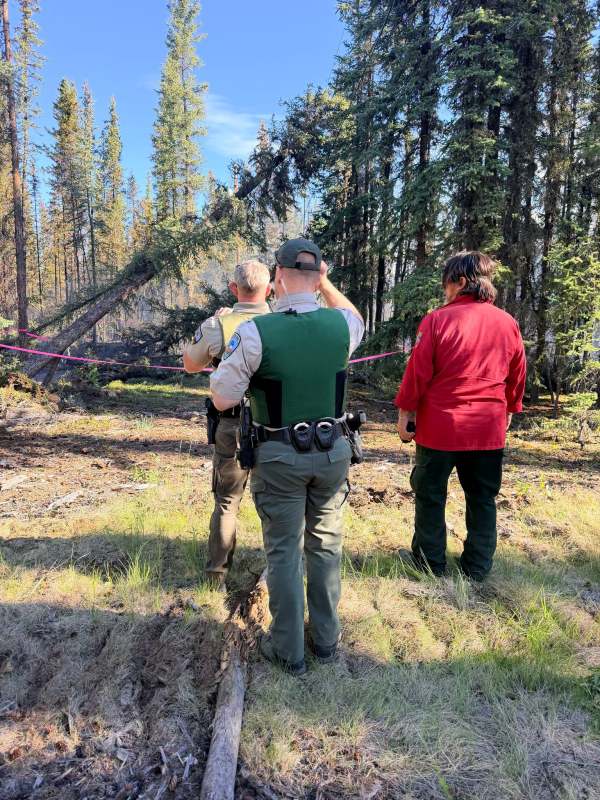
The Mukluk investigative team is being led by a DFFP nationally accredited fire investigator and assisted by a State Park Ranger Wildfire Investigator trainee. Supporting them are two veteran investigators from Cal Fire who are renowned subject matter experts in wildland fire investigation. This is the first time the DFFP has partnered with Cal Fire on an investigation of this nature in Alaska involving a complex wildland-urban interface (WUI) where large-scale evacuations have occurred, and multiple structures/infrastructure have been damaged or destroyed. The staff from Cal Fire bring with them specialized knowledge and decades of hands-on experience. Working alongside Alaska’s investigators, they provide invaluable on-the-job mentorship and advanced technical skills that will level up the state’s capabilities for years to come. In addition to Cal Fire, the Bureau of Alcohol, Tobacco, Firearms and Explosives (ATF) has joined the team. They will provide their elite technical services and training at no cost to Alaska. These will include cutting-edge origin-mapping technology, photogrammetry, high-resolution spatial mapping tools, and advanced forensic analysis used nationwide for high-consequence fire scenes.
A State-Led Effort Rooted in Community Trust
While federal and out-of-state partners bring invaluable tools to the scene, leadership of the operation remains strictly local.
- Locally and State-Led Command: This remains a state-led investigation. DFFP investigators and local partners retain full responsibility and authority over the Mukluk Fire investigation. The ATF team is in Tok solely at the state’s request to provide technical expertise and equipment, not to take over the investigation or the incident.
- Focus on Origin & Cause, Not Federal Enforcement: The visiting team’s role is strictly limited to fire origin and cause analysis, scene documentation, and technical support. Their presence does not represent an increased federal law-enforcement footprint in Tok.
- Respect for the Community: Recognizing that trust and personal relationships matter deeply in Tok and surrounding communities, visiting personnel will work side-by-side with local investigators who know the area well. All personnel are expected to approach their work respectfully, communicate transparently about their role, and operate with the understanding that they are guests in the community.
- Retaining Results for Transparency: DFFP will remain actively engaged throughout every phase of the process and will retain all investigative findings developed by the team.
How This Collaboration Benefits Tok Residents and Alaska
Bringing this level of national expertise to the Interior creates immediate benefits for those affected by the Mukluk Fire while establishing a lasting positive impact across the state.
For Affected Residents & Property Owners:
- Closure and Definitive Answers: Families who lost homes and structures deserve to know exactly what happened. A highly rigorous investigation provides clear, evidence-backed answers to eliminate uncertainty and rumors.
- Insurance and Financial Relief Claims: Having an investigation that meets gold-standard national criteria ensures that origin-and-cause documentation stands up under legal and financial scrutiny. This helps streamline insurance processing, disaster assistance claims, and liability determinations for impacted property owners.
- Prevention of Future Neighborhood Fires: Identifying the exact mechanism of ignition, whether infrastructure-related or accidental, helps the local community and utility partners implement precise preventative measures to protect homes in Tok from similar events.
For the State of Alaska:
- Up-Skilling Alaska’s Investigators: Working shoulder-to-shoulder with Cal Fire and ATF subject matter experts serves as an intensive training environment. Alaska’s state investigators gain hands-on proficiency with advanced origin-mapping software, spatial modeling, and forensic tools.
- Zero Cost to Alaskan Taxpayers: Securing federal ATF assistance without fees maximizes state resources while delivering world-class investigative capabilities.
- Elevating Alaska’s Standard of Practice: The protocols, interagency workflows, and technical expertise built during the Mukluk Fire set a new, higher standard for how wildland-urban interface fires will be investigated across Alaska for decades to come.
Serving the Tok Community
Meeting the national standard for wildland fire investigation is not merely a legal process; it is a fundamental commitment to the public. By forging new cooperative connections, leveraging federal assistance at zero cost, and learning alongside top industry experts, the Alaska Division of Forestry & Fire Protection is raising the standard of its fire investigation program.
The ultimate goal of this collaboration is a thorough, transparent, and credible investigation. By documenting the fire with the highest degree of care, the team aims to answer the community’s questions and deliver the clarity, accuracy, and resolution that residents of Tok deserve.
Categories: Active Wildland Fire, AK Fire Info, Alaska DNR - Division of Forestry & Fire Protection (DFFP)

